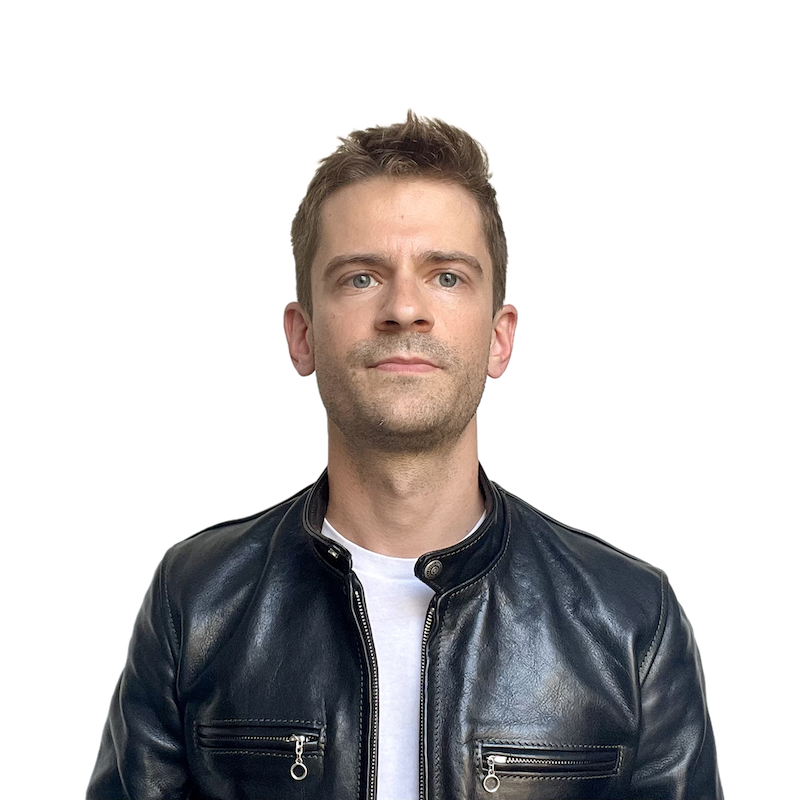
KYLE BAASCH
I’m currently a Lecturer in the Discipline of English and Comparative Literature at Columbia University, where I teach the Contemporary Civilization sequence in the Core Curriculum. I earned my Ph.D. in Comparative Literature from the University of Minnesota in 2025, where I taught about a dozen undergraduate courses on literary modernism, the culture wars, the campus novel, world literature, and beyond. I also hold degrees from the School of Visual Arts and Bard College.
Most of my recent work deals with early twentieth-century German literature and the history of the human sciences. My book project, provisionally titled “Unpolitical Theory: Cultural Studies in Weimar Germany,” tells the story of a group of scholars who rebelled against the disenchanting effects of modern disciplinary research by developing a new methodological foundation for the study of culture. Although this interwar research paradigm has long been conflated with reactionary politics and pseudoscience, I defend it as a transvaluation of theoretical values with relevance for contemporary humanistic scholarship. The project’s main figures are Max Weber, Ernst Troeltsch, Oswald Spengler, Friedrich Gundolf, Erich Kahler, Alfred Weber, Max Scheler, Siegfried Kracauer, and Walter Benjamin. I’m happy to write or speak about any of them.
An early version of one of my chapters, which reconstructs a legendary debate between Spengler and Weber in Munich, will appear soon in New German Critique; I’ve also written an essay on the American reception of Spengler for Compact Magazine. I’m currently working on two public-facing essays–one on the poet Stefan George and another on the philosopher Alfred Seidel–as well as a translation of a selection from Spengler’s Decline of the West.
In grad school, I wrote a number of articles on Frankfurt School Critical Theory and the reception of Marxism in Anglo-American academia, including: a critique of Louis Althusser’s interpretation of Marx in Radical Philosophy; a response to one of my critics in the same journal; a translation of a 1968 debate between Alfred Schmidt and Nicos Poulantzas along with a contextualizing introduction in Historical Materialism; a meditation on Theodor Adorno’s sex life in Telos; some critiques of the concepts of “totality” and “late capitalism” in Qui Parle and Compact; and more.